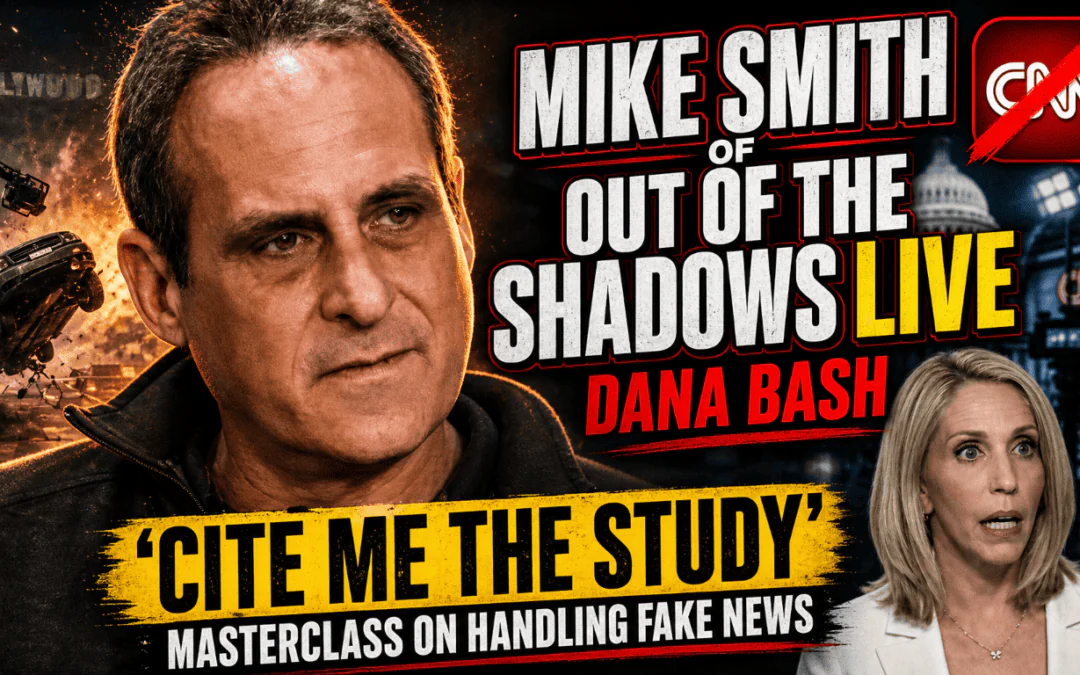
Most believers encounter the armor of God meaning in a sermon or a study guide. Mike Smith encountered it in a room where he believed he was about to die. Appearing on the B2T Show on August 3, 2026, the former Hollywood stunt performer and creator of the documentary series Out of the Shadows described a face-to-face confrontation with a dark spiritual entity, the passage that arrived in his mind mid-encounter, and the declaration he says ended it.
The Encounter: When a Rebuke Produced Nothing
Smith recounts the entity standing directly in front of him and reaching toward him. He says he was certain he would not survive it. His first response was to rebuke it in the name of Jesus. According to Smith, it laughed.
Then, he says, a passage flooded his mind: the full armor of God from Ephesians 6. The belt of truth. The breastplate of righteousness. Feet shod with the gospel. The shield of faith. The helmet of salvation. The sword of the Spirit, which is the Word of God.
Smith reports declaring: “I rebuke you, Satan, with the blood of Jesus Christ.” He says the entity disappeared.
Smith identifies the invocation of the blood as the turning point. Worth noting alongside his account: Scripture does not present the name of Christ as powerless. In Luke 10:17 the seventy-two return reporting that demons submitted to them in that name. The two are not competing claims. The name is the authority a believer carries; the blood is the ground that authority stands on — the completed sacrifice that removed any legal claim against those it covers.
What Smith describes is not a man acquiring power he lacked. It is a man discovering, mid-crisis, what had already been given to him at the moment he was saved. That provision was in place before he knew its name.
Thirty Years in Hollywood, Then 2014
Smith describes three decades in the film industry as a stunt performer, fight choreographer, stunt coordinator, and second-unit director. He is a lifelong martial artist and says he had never genuinely feared a physical opponent.
In 2014, he says, a catastrophic injury left him paralyzed from the waist down. He describes it as dismantling his identity and his ego, and as the road that led to genuine salvation. The opposition, by his account, followed shortly after.
He was raised Catholic and knew the Hail Mary and the Our Father, but reports having no working knowledge of spiritual warfare, no instruction on the armor of God, and no framework for what the blood of Christ accomplishes in a confrontation. A man who had spent thirty years learning to fight found himself in one he had never trained for.
The detail worth sitting with is the timing. God did not wait for Smith to become equipped before meeting him in that room. Preparation was never the entry requirement.
What Each Piece of the Armor Guards
The passage Smith recites comes from Ephesians 6, where Paul lists six pieces and assigns each a function.
The belt of truth holds the rest together and guards against deception. The breastplate of righteousness covers the heart and conscience. Feet shod with the gospel of peace provide footing to stand and to advance. The shield of faith is described in the text as extinguishing flaming darts. The helmet of salvation guards the mind and a believer’s assurance. The sword of the Spirit, the Word of God, is the single offensive piece — the weapon Jesus himself used against temptation in Matthew 4.
Paul addressed that instruction to people already in the faith. The armor is not issued at conversion and then set aside; the language is active and continuing, which is why the passage reads as a standing practice rather than a one-time event.
Every piece on that list was provided rather than earned. Paul does not tell believers to manufacture truth, righteousness, or faith — he tells them to put on what God already supplied.
Spiritual Open Doors and What Closing One Requires
Smith teaches that certain behaviors and patterns create what he calls spiritual open doors — access points through which he says dark influence operates. He names drugs, pornography, unforgiveness, and generational curses specifically.
On unforgiveness, Smith argues the person holding it sustains more damage than the person it is aimed at. He treats it as a spiritual matter requiring deliberate closure rather than an emotional state to be managed.
Because he was adopted, Smith says he had no access to his family’s generational history and could not identify what may have been passed down. He describes using the blood of Christ and the Word to break those curses regardless — addressing by category what he could not address by name — and reports that it held.
That is the encouraging shape of his account. He did not need a complete file on his own bloodline before God would deal with it. There is no line in anyone’s history that God does not already have in front of him.
Where Medical Care Belongs
Testimonies like Smith’s carry a risk of misapplication, and it is worth stating the boundary plainly. Not every difficulty is spiritual in origin.
Greg Locke, who leads one of the most prominent deliverance ministries in America, teaches directly that if a situation is not demonic, the person should get medication, see a therapist, or get treatment. That counsel carries particular weight coming from someone who is not inclined to underplay the demonic.
Persistent depression, disordered thinking, thoughts that will not quiet, or fear without an identifiable source all warrant medical evaluation. Seeking one is not a failure of faith. Inner healing and deliverance sessions through B2T Ministries begin with a screening conversation before any prayer takes place, for exactly this reason.
The two categories are not rivals. A person can face real spiritual pressure and a real medical condition at the same time, and God is not divided about which of the two he cares for. He made the body and the mind both, and he is not offended by anyone taking care of either.
The Book of Enoch: Smith’s Own Framing
Smith says he felt led to read the Book of Enoch after his conversion, working through both the Laurence and Charles translations. He notes it is extra-biblical — outside the Protestant and Catholic canon, though retained in the Ethiopian Orthodox Bible — and says it reshaped how he reads Genesis 6, the Nephilim, and the unseen dimensions behind the visible world.
He is careful to present this as his own path rather than a prescription, and acknowledges his own hesitation at the time, given that he had not yet finished the Bible itself. He points to Dr. Michael Heiser and the late Rob Skiba as scholars engaging this territory academically.
The pattern underneath is worth more than the specific text. A man came to faith and immediately became hungry to understand. That appetite was not something Smith generated on his own, and it is not unique to him.
Stillness as a Posture
Smith closed the segment with something plain: sometimes a person stops fighting, takes a knee, and prays. His anchor was Psalm 46:10 (context: God Is Our Fortress — Psalm 46:1-11) ESV — “Be still, and know that I am God.”
Coming from someone whose career was built on movement, capability, and physical dominance, Smith describes stillness as among the hardest disciplines he has learned, and among the most transformative.
The verse it comes from is not addressed to people in calm conditions. Psalm 46 describes mountains falling into the sea and nations in uproar, and the stillness it commands is possible precisely because God is a fortress that does not depend on anyone’s ability to hold it.
Explore more B2T Show episodes and teaching at faithnfreedom.org/b2t-show/.
Watch and & Join the Discussion →
Join Rick Live — 5 Days a Week:
Monday–Thursday at 5pm CST — The B2T Show: true news, Bible teaching, and prophetic insight. Followed by PraiseNPrayer worship on Monday and Thursday and WordNWorship on Wednesdays.
Sunday at 11am CST — WordNWorship
Watch on Rumble:
B2T Show → rumble.com/c/Blessed2Teach
PraiseNPrayer & WordNWorship → rumble.com/c/GrowingYourFaith
Watch live free on any device: faithnfreedom.social/watch
Questions About the Armor of God and Mike Smith’s Testimony
What does the armor of God mean in practical terms?
Ephesians 6 assigns each of six pieces a specific function rather than describing a single general covering. Truth guards against deception. Righteousness covers the heart and conscience. The gospel of peace supplies footing. Faith deflects what the text calls flaming darts. Salvation guards the mind. The Word of God is the one offensive piece. Mike Smith says the entire passage arrived in his mind during a spiritual confrontation, and that reciting it preceded the encounter ending. Paul wrote the passage to believers already in the faith, framing the armor as a continuing practice rather than a single act at conversion.
Why did Smith’s first rebuke fail to move the entity?
Smith reports rebuking the entity in the name of Jesus and says it laughed rather than leaving. He identifies his subsequent declaration invoking the blood of Jesus Christ as what ended the encounter. Scripture does not treat the name as ineffective — Luke 10:17 records seventy-two ordinary disciples reporting that demons submitted to them in it. The distinction his account illustrates is between the authority a believer carries and the finished work that authority rests on. Smith frames the moment as discovering what he already had rather than acquiring something new.
Is conversion supposed to end spiritual opposition?
Smith’s account places his encounter after his salvation rather than before it, and he presents conversion as the beginning of active spiritual engagement rather than immunity from it. The Ephesians 6 passage supports this reading: Paul addressed the instruction to stand against spiritual forces of evil to people already in the faith, which would be unnecessary if conversion settled the matter. Smith’s particular concern is for new believers who hold full standing before God while having received no instruction in what that standing provides.
What counts as a spiritual open door?
Smith names drugs, pornography, unforgiveness, and generational patterns as specific examples of what he calls open doors — behaviors and circumstances he says create access for dark spiritual influence. He distinguishes them from vague spiritual concepts, treating each as identifiable and addressable. His teaching holds that a door left open allows anything driven out to return, which is why he insists the originating behavior must actually stop before any declaration is made over it.
How does Smith describe breaking a curse he could not name?
Smith was adopted and says he had no access to his family’s generational history, leaving him unable to identify what may have been passed down. He describes using the blood of Christ and the Word of God to break those curses by category rather than by specific name, and reports that the approach held. His underlying claim is that the covering applies to what a person can identify and to what they never will — a point he draws directly from his own circumstances rather than from a theoretical framework.
What is the responsible role of medical care here?
Substantial. Greg Locke, who leads one of the most prominent deliverance ministries in America, teaches that where a situation is not demonic, a person should obtain medication, see a therapist, or get treatment. Persistent depression, disordered thinking, or fear without identifiable cause all warrant clinical evaluation, and seeking it does not indicate weak faith. Inner healing and deliverance sessions through B2T Ministries begin with a screening conversation before any prayer. Spiritual pressure and medical conditions frequently coexist, and addressing one never requires dismissing the other.
Why does Smith reference the Book of Enoch?
Smith says he felt led to read it following his conversion and worked through both the Laurence and Charles translations. He is explicit that the text is extra-biblical, sitting outside the Protestant and Catholic canon while remaining part of the Ethiopian Orthodox Bible. He describes it as altering how he reads Genesis 6 and the Nephilim accounts, and presents this as his own spiritual path rather than a recommendation. He references Dr. Michael Heiser and the late Rob Skiba as scholars working seriously in that territory.
What was Mike Smith’s background before his conversion?
Smith spent thirty years in the film industry as a stunt performer, fight choreographer, stunt coordinator, and second-unit director, and is a lifelong martial artist. He says a catastrophic injury in 2014 left him paralyzed from the waist down, dismantling the identity his career had been built on. Raised Catholic, he reports knowing the Hail Mary and the Our Father but having no working knowledge of spiritual warfare, the armor of God, or the function of Christ’s blood in a spiritual confrontation until after his conversion.